How Much Does a Trading Bot Cost? | Quberas
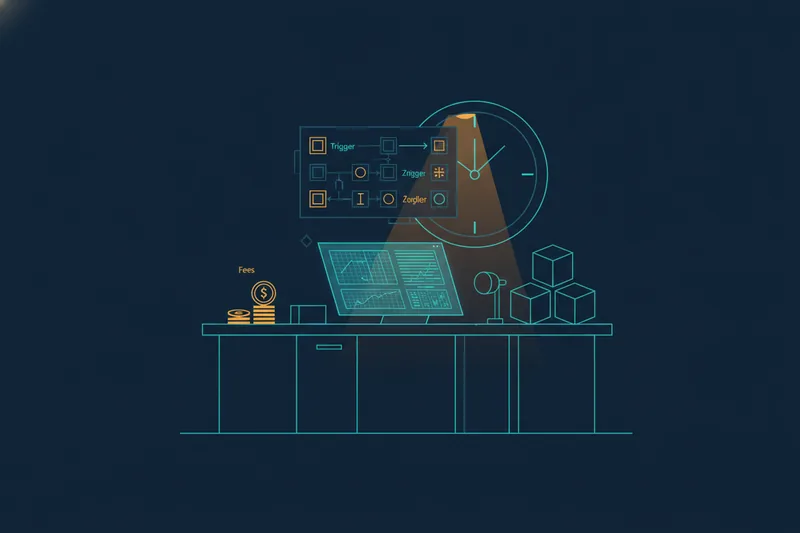
A trading bot can cost anywhere from $0 for a free tier to $500+ a month for a premium subscription, or several thousand dollars for a custom-built bot — but the subscription price is only part of the bill. The real cost includes exchange fees, data costs, and the hours you spend debugging a strategy you can't fully see inside. This breakdown covers both: what platforms actually charge, and the hidden costs that make a "cheap" bot expensive in practice.
What Determines the Cost of a Trading Bot? (Overview)
Trading bot pricing splits into a few clear tiers: free plans with limited bots or exchanges, entry subscriptions around $20–$50/month, mid-tier plans around $50–$150/month with more concurrent strategies and exchange connections, and premium or enterprise plans above that. Where a bot lands on this scale depends on three things.
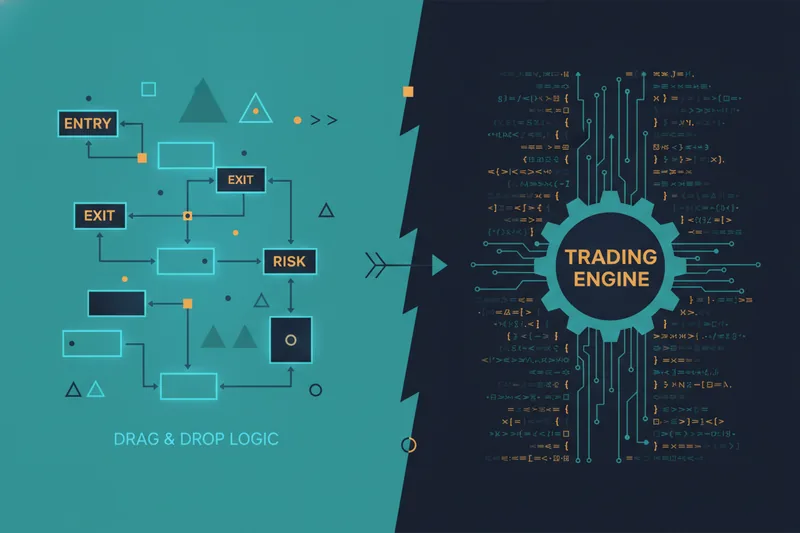
First, no-code vs. coded bots. No-code platforms let you assemble entry, exit, and risk logic through a visual interface — no programming required — which keeps pricing predictable and subscription-based. Coded bots (your own Python script, or a freelancer's build) avoid a subscription but shift cost into development time and maintenance, which is where most first-time traders underestimate the total price. This is the gap a platform like Quberas is built to close: a visual, no-code strategy builder that lets you see exactly where your rules trigger on the chart, without paying a developer to translate your idea into code.
Second, exchange API fees — trading fees your exchange charges per order, separate from any bot subscription, that apply whether the trade was placed by hand or by a bot. Third, custom AI bot development cost: a bespoke bot with machine-learning components or proprietary signal generation can run from a few hundred to tens of thousands of dollars depending on complexity, plus ongoing maintenance as markets shift and the code needs retuning.
Trading Bot Pricing Models Explained
Subscription plans
Most retail bot platforms use tiered monthly or annual subscriptions, with higher tiers unlocking more active bots, exchange connections, or backtesting depth. Some platforms simplify this further: Composer.trade, for example, charges one flat monthly or annual fee for full platform access rather than tiering by number of strategies or capital deployed.
Pay-per-day or usage-based pricing
Instead of a recurring subscription, some tools charge per trade or per contract. Tradovate's pay-as-you-trade model charges $0.39 per side for Micro contracts, $1.29 for Standard, and $0.20 for Nano and Event contracts, with no monthly fee at all. Prediction-market venues follow a similar logic: at a 50-cent contract price, taker fees run about $1.75 on Kalshi and $1.56 on Polymarket per 100 contracts. This model suits low-frequency traders; it gets expensive fast for anyone running high-volume strategies.
One-time and custom development costs
A one-time purchase — a license, an indicator pack, or a pre-coded bot — avoids recurring fees but usually locks you into whatever logic it shipped with. Custom AI bot development sits at the top of the cost range: you're paying for original strategy logic, and typically for ongoing updates as the model or ruleset needs retraining or retuning against live markets.
Cost Comparison of Popular Trading Bot Platforms
Automated trading tools generally fall into four categories: full coding environments, no-code/low-code builders, signal-to-execution layers, and pre-built bot marketplaces. Where a given platform sits shapes both its price and what you're actually paying for.
Cryptohopper and Coinrule are subscription-tiered, template-driven builders aimed at retail crypto traders — pricing scales with the number of active bots and exchange connections. 3Commas and WunderTrading-type platforms add Signal Bots, which execute trades from external alerts, alongside their DCA (dollar-cost-averaging) and grid bot tools, usually at a similar tiered-subscription structure. Some platforms also monetize through copy trading, where lead traders charge followers a performance fee — typically 10–20% of net profits — on top of, or instead of, a flat subscription.
Coded alternatives like AlgoBuilder offer similarly structured build-backtest-deploy workflows but rely on Python rather than a visual interface, while Tradetron sits closer to a no-code builder with drag-and-drop strategy creation — worth noting when comparing "no-code" claims across platforms, since the label covers a wide range of actual interfaces. Broader trading software also includes a third pillar many comparisons skip: analytics and journaling tools for reviewing performance after the fact — a cost worth budgeting for even if your bot subscription doesn't include it.
Free vs Paid Trading Bots: What You Get at Each Price Point
Free tiers are real, but they're rarely free of trade-offs. NinjaTrader's free tier has no monthly fee and still allows live trading, just at higher per-contract commissions — $0.39 per side for Micro contracts and $1.29 for Standard — rather than gating live trading behind a paid license. That's a meaningful model: you pay through execution costs instead of a subscription.
What free tiers most commonly restrict, across platforms generally, is backtesting depth — how much historical data you can run a strategy against before trusting it live — plus the number of simultaneous bots and exchange connections. If a free plan limits backtesting to a short window or a single asset, you're effectively paying for that gap in confidence with real capital once you go live. Coded free tools face the same ceiling: the code might be free, but validating it thoroughly still takes time you're not billing anywhere.
The Hidden Costs No Pricing Page Tells You About
Exchange and data fees
Even "commission-free" trading isn't cost-free. Passthrough regulatory charges — like the SEC fee and FINRA trading activity fee on U.S. stock and options sell orders — can apply regardless of the platform's advertised commission structure. On the execution side, quoted prices can carry a mark-up beyond the raw spread, and market orders are exposed to slippage — the gap between the price you expected and the price you actually got, which widens in fast-moving or thin markets. None of these show up on a bot's pricing page.
The cost of a bot you can't see inside
This is the cost most comparisons miss entirely. A cheap bot with opaque logic — rules buried in parameters or code you didn't write — still requires debugging when it misfires, and debugging something you can't visually trace is slow. You're guessing at which condition fired, re-running tests, and hoping you've found the actual cause. A platform where every rule is a visible node on a deal map — the visual sequence of entry, averaging, exit, and stop-loss stages — and where a visual debugger highlights the exact chart zone tied to each condition turns that guesswork into a five-minute check instead of a lost afternoon.
The cost of false signals and poor threshold tuning
False signals — trades triggered by noise rather than a real setup — are usually a threshold problem: a condition set too loosely fires on minor fluctuations. Fixing that requires seeing how close a condition came to triggering versus when it actually did, and adjusting the threshold accordingly. A black-box bot gives you the trade log, not the reasoning, so you tune blind. That's not a subscription cost, but it's a real one, paid in losing trades.
Is a Trading Bot Worth the Cost?
A bot is worth paying for when you can trust its decisions, not just its win rate. Backtesting — running the strategy against historical data before risking capital — is how you build that trust, but only if you understand why a rule fired, not just that it did. AI-driven tools once reserved for institutional desks are now available to retail traders, and both DCA bots that buy or sell at set intervals and drag-and-drop builders with no coding requirement have lowered the entry barrier considerably. But running a bot live around the clock, on your own infrastructure, raises real operational risk that a home setup can't reliably absorb — which is why most serious live deployments use a dedicated server rather than a personal PC left running. ROI, in the end, comes down to whether the fee you're paying buys you clarity into the logic — or just a faster way to lose money you didn't understand you were risking.
How to Choose a Trading Bot Based on Budget and Skill Level
If you're building your first automated strategy, prioritize transparency over feature count. A no-code condition builder — where you combine price, indicator, volume, and crossover conditions without writing logic yourself — lets you see your rules take shape as you build, and a deal map keeps entries, averaging orders, exits, and stop-losses organized as your strategy grows past a single rule.
If you're scaling beyond manual crypto trading, the priority shifts to validation and iteration speed. Backtest variations against historical data, then use a visual debugger to check whether a trade triggered because your logic was right or because a threshold was set too loose — before that mistake repeats at scale.
If you'd rather launch a ready-made strategy than build from scratch, a strategy marketplace lets you select an existing strategy, set your own risk parameters, and test it before committing capital — a reasonable middle ground between a fully custom build and a fully coded bot you'd have to maintain yourself.
FAQ
Is a trading bot worth it? It depends on whether the fee buys you understanding, not just automation. A bot you can backtest and visually trace is worth more than a cheaper one whose logic you have to take on faith.
What's the cheapest trading bot? Free tiers exist and can support live trading, but usually with trade-offs — higher per-trade commissions, fewer bots, or shorter backtesting windows — rather than a free ride with no cost anywhere.
How much does a custom trading bot cost? Custom AI bot development can range from a few hundred dollars for a simple script to tens of thousands for a proprietary system, plus ongoing costs to maintain and retune it as markets change.
Are free trading bots any good? They can be, for learning or light use, but the restrictions on backtesting depth and exchange connections tend to show up right when you need them most — before going live with real capital.
See exactly what you'd be paying for: build and backtest a strategy visually on Quberas before committing to any subscription.