Best Futures Trading Platform: Algo Trading Guide
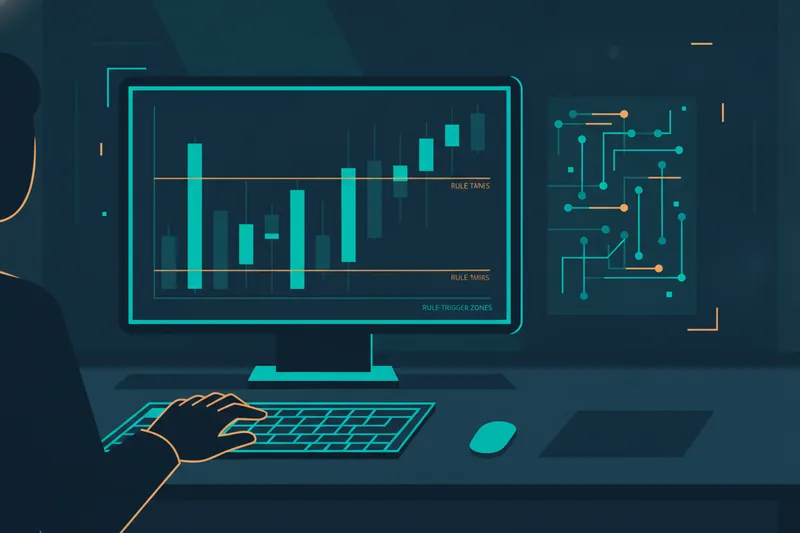
Futures traders comparing platforms usually get one of two extremes: broker-affiliate roundups that rank tools by commission tables, or generic "best of" lists that never touch what happens once you decide to automate part of your strategy. The honest answer is that no single platform wins on every axis — the right pick depends on whether you're new to futures, trading manually at volume, or trying to build and validate a rules-based system before you risk capital on it. This guide walks through all three, and gives the algo-trading angle the space it usually doesn't get.
What Makes the Best Futures Trading Platform
Before ranking anything, it helps to know what actually separates a good futures platform from a mediocre one. Six factors matter most: order execution and routing speed, data feed reliability — most serious futures platforms connect through Rithmic, a market-data and order-routing network that many brokers use to reach the exchanges — charting quality (TradingView and Sierra Chart sit at opposite ends of that spectrum, one browser-based and simple, the other deeply customizable), commissions and margins, day trading margins specifically, and algo/automated trading support. That last one is where most comparisons stop short, even though a growing number of traders want to test a strategy's logic visually — something platforms like Quberas focus on — before deciding which broker will actually execute it.
Top Futures Trading Platforms Compared
The futures platform landscape splits into execution platforms, futures-focused brokers, and charting tools that plug into either. Here's the field before drilling into use cases.
- NinjaTrader — a long-standing execution and charting platform with per-contract commission tiers and deep order-flow analysis tools.
- Tradovate — browser- and mobile-first, with pay-per-use and subscription pricing aimed at active retail traders.
- AMP Futures — a futures brokerage supporting multiple third-party platforms via Rithmic and CQG connectivity.
- Optimus Futures — another multi-platform futures broker geared toward active and systematic traders.
- Webull — a mobile-first brokerage that expanded from stocks into futures with a simplified interface.
- TradingView — charting-first, with broker integrations for execution rather than being a broker itself.
- Sierra Chart — a highly customizable charting and order-execution platform favored by professional and systematic traders.
- Quantower — a multi-asset platform with broker connectivity and some algo-development capability for power users.
Rithmic connectivity is worth noting because it's shared infrastructure: several major futures brokers and prop-trading firms route through it alongside platforms like Tradovate, which is part of why the same execution quality shows up across seemingly different platforms.
At-a-Glance Comparison Table
| Platform | Best For | Execution/Data | Notable Trait |
|---|---|---|---|
| NinjaTrader | Active traders | Rithmic, CQG | Free tier available; live trading at higher per-contract commissions than paid tiers |
| Tradovate | Beginners, active traders | Proprietary clearing, Rithmic | Browser/mobile-first, flexible pricing |
| AMP Futures | Active/algo traders | Rithmic, CQG, TT | Low account minimum |
| Optimus Futures | Active/algo traders | Rithmic, CQG | Supports multiple third-party platforms |
| Webull | Beginners | Proprietary | Simple mobile-first UI |
| TradingView | Charting/analysis | Broker integrations | Best-in-class charting, pairs with a broker |
| Sierra Chart | Advanced/professional | Rithmic, CQG, DTN | Deep customization, DOM trading |
| Quantower | Active/algo traders | Rithmic, multiple | Multi-asset with algo-development options |
Best Futures Trading Platforms for Beginners
Webull and Tradovate are the two most approachable entry points. Webull carries over the simplified, mobile-first interface it built for stock trading, which flattens the learning curve for someone who has never placed a futures order. Tradovate's browser-based platform and pay-per-use pricing mean you're not locked into a monthly subscription while you're still learning position sizing and order types. Account minimums across futures brokers are generally modest compared to equities — some, like AMP Futures, accept as little as $100 to open an account — but a low minimum doesn't mean a small account should trade full-size contracts; ease of use matters as much as capital here, since a clean order ticket reduces costly mistakes early on.
Best Futures Trading Platforms for Active and Day Traders
Active day trading depends on more than one platform — it typically runs on three pillars: an execution platform, a reliable market-data feed, and a way to review performance afterward. NinjaTrader covers the first two well, with order-flow tools and tight Rithmic connectivity for low-latency fills. AMP Futures and Optimus Futures are futures brokers built around that same Rithmic infrastructure, giving active traders a choice of front-end while keeping execution quality consistent. Sierra Chart remains the go-to for traders who want granular DOM (depth-of-market) control and chart customization beyond what most retail platforms offer. Because day trading itself spans several distinct styles — range trading, trend trading, gap trading, breakout trading — the platform needs to support fast order modification and multiple chart layouts, not just one workflow. Day trading margins (the reduced capital a broker requires to hold a position only during market hours) are set by the broker on top of exchange minimums, so they vary by platform even for the same contract.
Best Platform for Algorithmic and Automated Futures Trading
Quantower is the closest thing to a bridge platform here — it supports broker connectivity alongside some algo-development tools, but building non-trivial logic still generally means writing code. That's true across most of the category: automated trading tools broadly split into full coding environments, no-code/low-code builders, signal-to-execution layers, and pre-built strategy marketplaces. A tool like AlgoBuilder, for instance, lets you construct and backtest rule-based strategies but leans on Python to do it, and marketplace-style bots such as 3Commas' Signal Bots automate execution from external alerts rather than letting you construct the logic visually.
No-Code Strategy Building vs Code-Heavy Platforms
This is where Quberas sits in the no-code/low-code category — closer in spirit to a drag-and-drop builder like Tradetron than to a coding environment. Instead of scripting conditions, you assemble a deal map: a visual layout of a strategy's entry, averaging, exit, and stop-loss stages, connected the way you'd sketch them on paper. Nested logic across price, indicators, volume, and crossovers is built with a puzzle-style condition builder rather than syntax, so the strategy's structure stays readable even as it gets more complex.
Backtesting Rigor: OHLCV vs Bid/Ask Data
Backtesting quality depends heavily on the data underneath it. OHLCV data — open, high, low, close, and volume for each candle — is the standard for most historical testing and is fine for strategies working on larger timeframes. Strategies sensitive to fill quality or short-term price action benefit from testing against bid/ask and order-book-derived data instead, which captures the actual liquidity and spread present at each moment rather than just the candle's summary. Quberas supports backtesting on both, and its visual debugger highlights the exact chart zones tied to each condition — including moments that came close to triggering but didn't — which is what makes threshold tuning possible instead of guesswork, cutting down on noise-driven entries before a strategy ever touches a live account.
Fees, Margins, and Account Minimums
Commission structures vary widely even within one platform. NinjaTrader, for example, charges $0.09 per contract on Micro futures and $0.59 on Standard contracts under its Lifetime license, versus $0.39 and $1.29 per side on its free tier — a real difference for anyone trading frequently. Margins (the capital a broker holds against an open position) and day trading margins are set independently by each broker on top of exchange requirements, so they're never identical across platforms even for the same contract. It's also worth remembering that "commission-free" claims elsewhere in trading don't always mean fee-free — pass-through regulatory charges can still apply regardless of the advertised commission, and the same scrutiny is worth applying to any futures platform's fee page. On account minimums: futures brokers generally don't require anything like the equities pattern-day-trading threshold. The $25,000 rule is a FINRA requirement for pattern day trading in stocks and options — it does not apply to futures accounts. Whether $1,000 is "enough" to trade futures depends entirely on the contract and broker: micro futures contracts carry day-trading margins that can fit that budget, but a thin account leaves little room for a losing streak, so the honest answer is that it's workable for learning, not for meaningful position sizing.
How to Choose a Futures Trading Platform
Match the platform to what you actually do, not to whichever one ranks first on a fee table:
- Beginners — prioritize a low minimum and a simple order ticket over advanced charting.
- Active/day traders — prioritize execution speed, Rithmic-grade data reliability, and margin costs over interface polish.
- Algo traders — prioritize automation support and risk-management logic. A platform that lets you attach stop-loss rules and a cooldown period after a loss directly into the strategy flow — rather than bolting them on manually after each trade — reduces the chance that emotion overrides the plan during a drawdown.
Automation support belongs on this checklist as its own line item, not an afterthought, because it changes how much confidence you can have in a strategy before it ever touches real capital.
Frequently Asked Questions
Is $1,000 enough to trade futures? It can cover the day-trading margin on a micro futures contract, which makes it viable for learning the mechanics. It's not enough capital to absorb a losing streak comfortably, so position size accordingly.
Do you need $25,000 to trade futures? No. The $25,000 minimum is a pattern-day-trading rule for stocks and options accounts; futures accounts aren't subject to it.
What is the best platform for algorithmic futures trading? It depends on whether you want to write code or build logic visually. Code-based environments give more raw flexibility; no-code builders like Quberas trade some of that flexibility for transparency and faster iteration, since you can see exactly where a rule fires on the chart before it goes live.
Is a strategy builder the same as a futures broker? No. A strategy builder like Quberas is where you construct, debug, and backtest the trading logic itself. You still need a futures broker for order execution, margin, and custody of funds — the two work together, not as substitutes.
If you're building toward an automated futures strategy rather than just picking a broker, try Quberas free to build, visually debug, and backtest your strategy before connecting it to your broker of choice.